

Discover the ultimate creative blueprint for crafting dreamy ethereal portraits with flowing fabrics and pastel tones using versatile AI prompts that elevate your digital art portfolio.
Digital portraiture has evolved into an expressive playground where traditional couture merges with surreal architectural wonders. Creators today seek imagery that transcends simple studio headshots, prioritizing atmosphere, layered storytelling, and delicate color science. By balancing soft pastel gradients with sweeping textiles, digital artists can craft breathtaking visuals that stand out across creative feeds.
Our curated collection of prompts explores rich cultural garments, avant-garde runway silhouettes, and cosmic vistas. From an emerald green sharara suit set against Mughal arches to an artist standing quietly in a sun-drenched minimalist atelier, these concepts deliver nuanced beauty across multiple creative themes.
Mastering these scenes requires understanding how light interacts with varied fabrics such as translucent organza, concrete-textured tailoring, and embroidered fusion lehengas. This comprehensive guide details everything you need to know to take these raw ideas and generate museum-quality renders using leading generation platforms.
What Are Dreamy Ethereal Portraits with Flowing Fabrics and Pastel Tones?
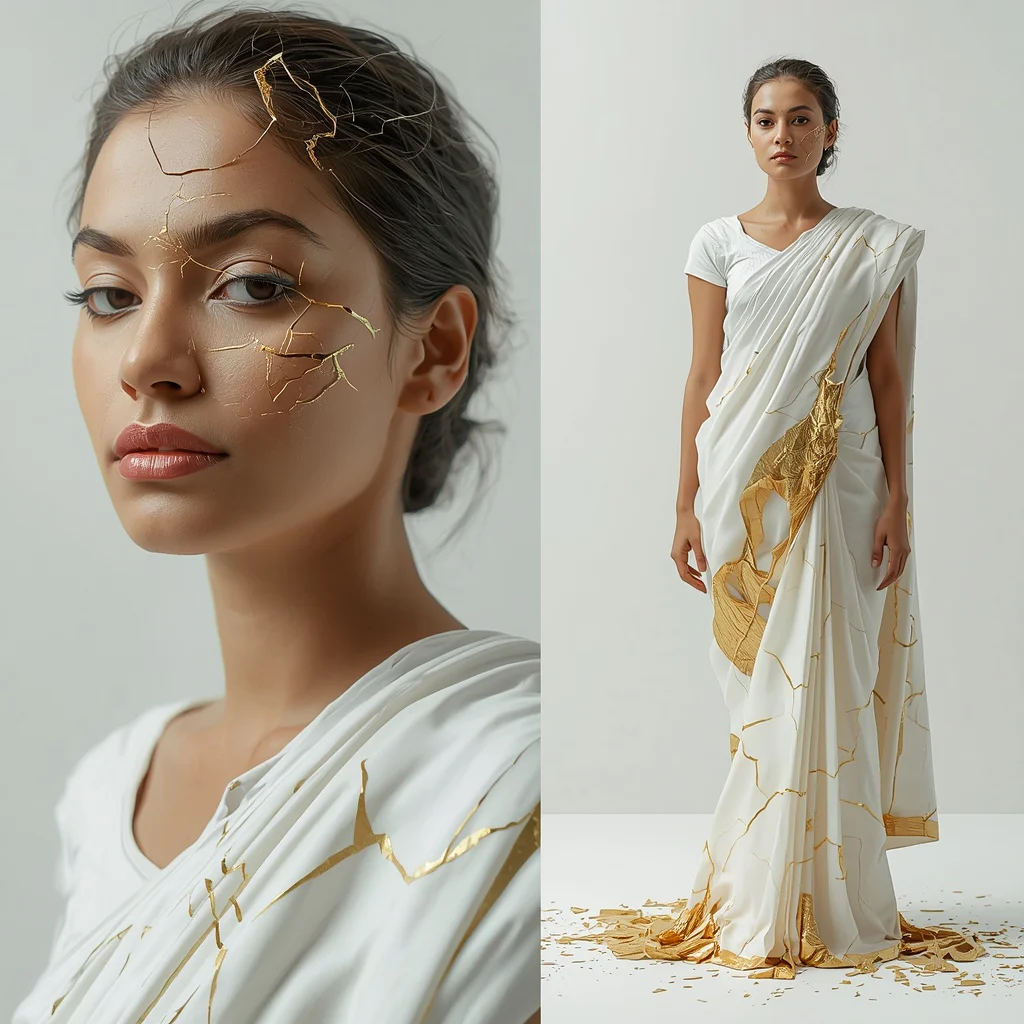
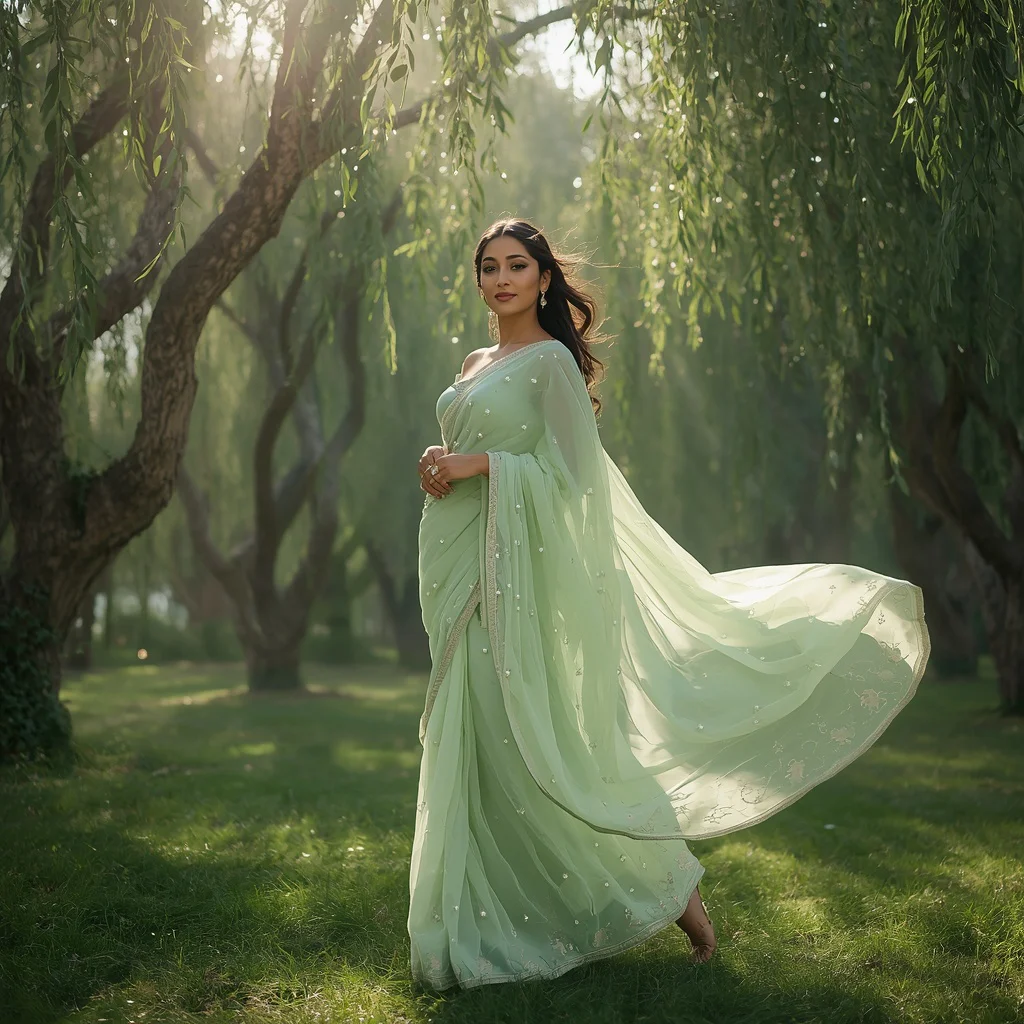
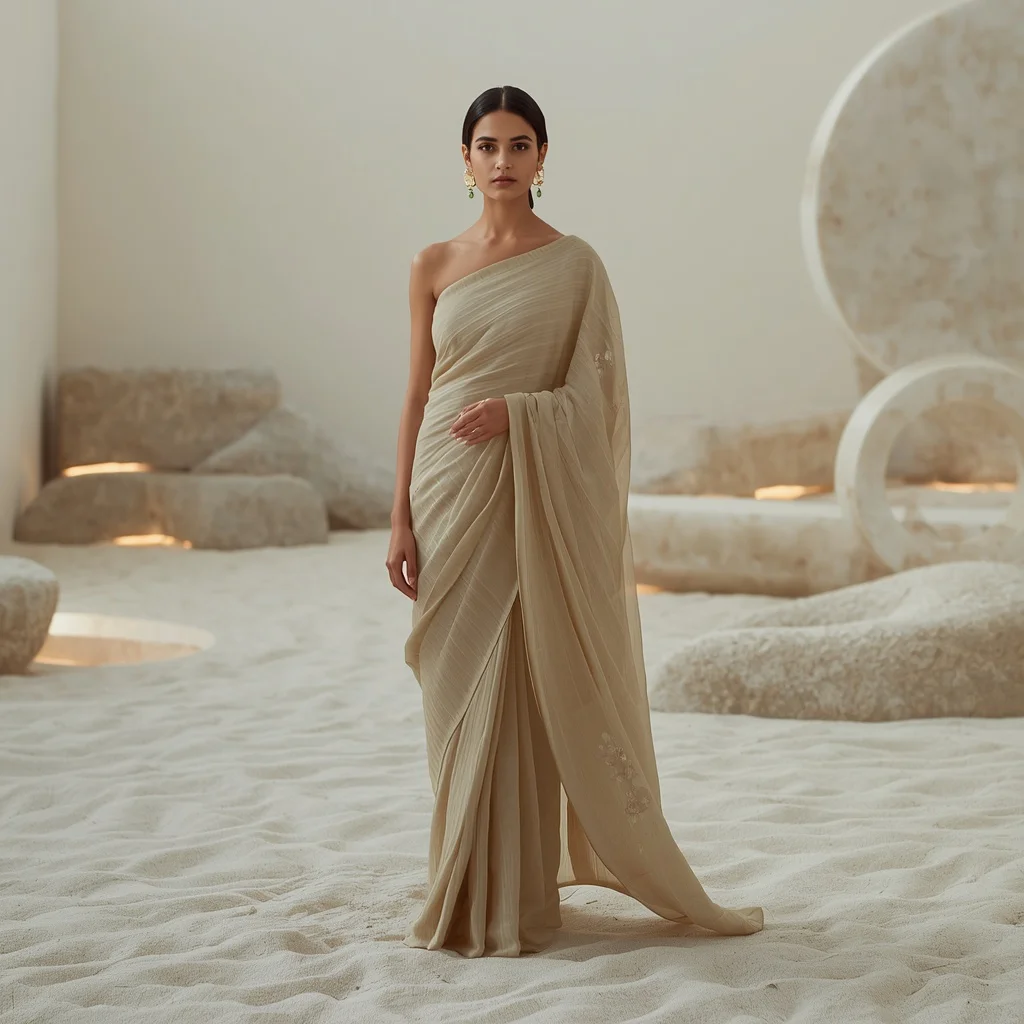
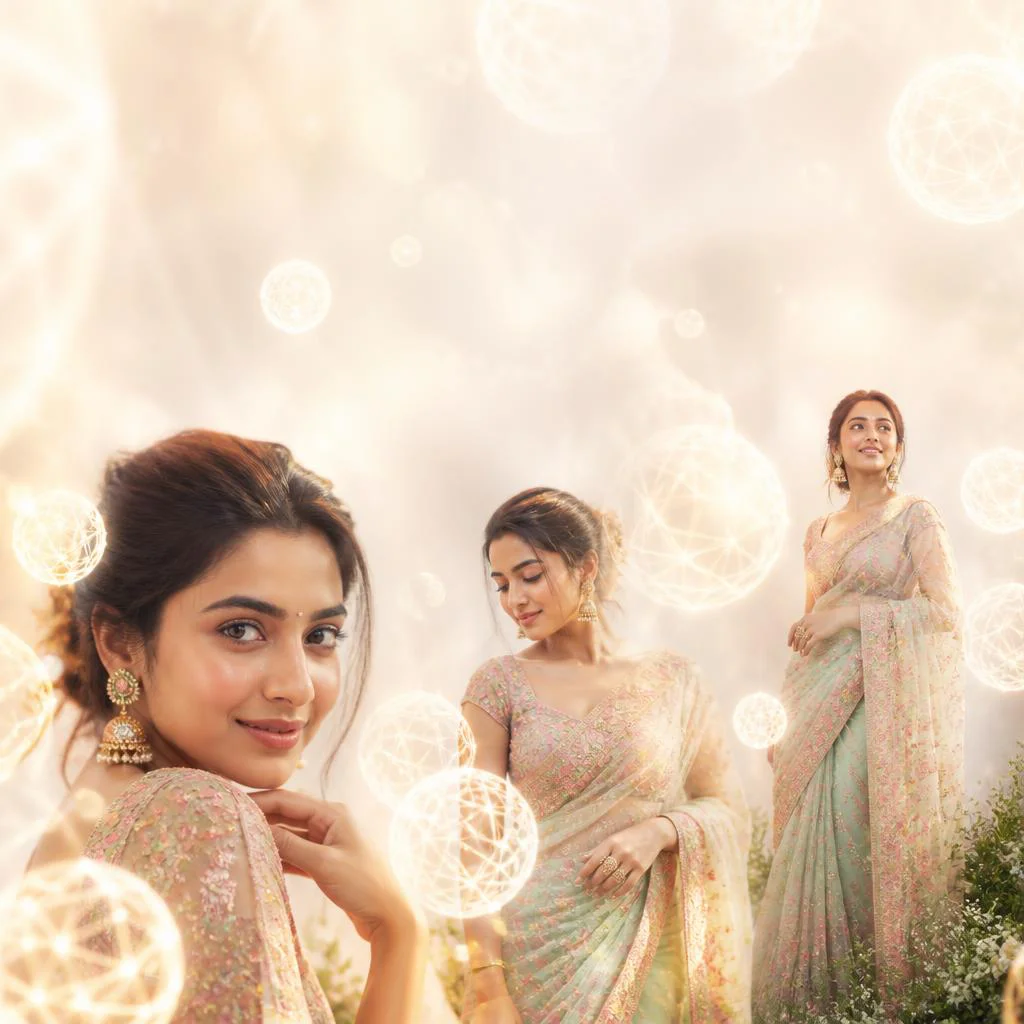
Dreamy ethereal portraits represent a style of digital art characterized by gentle lighting, weightless garments, and harmonious, low-contrast color palettes. Rather than harsh spotlights or aggressive neon saturation, these scenes employ diffuse natural illumination such as golden hour sunbeams, dappled window light, or cosmic stardust. The subject appears suspended in a serene, elevated moment that feels both intimate and mythic.
Central to this aesthetic is the dynamic motion of garments. Translucent fabrics billow into the surrounding atmosphere, architectural elements deconstruct across the silhouette, and intricate embroidery catches ambient reflections. Whether framing a classical Mughal courtyard or a contemporary art gallery, the visual narrative emphasizes poise, peaceful reflection, and timeless grace.
Why Dreamy Ethereal Portraits with Flowing Fabrics and Pastel Tones Is Trending
Audiences across creative communities are drawn to tranquil imagery that provides an antidote to loud, hyper-saturated social media feeds. The fusion of high-fashion editorial styling with soft pastel aesthetics brings a soothing luxury feel that appeals to fashion enthusiasts, brand designers, and digital collectors alike. The subtle elegance of floating gowns and airy spaces commands attention through craft rather than visual noise.
Furthermore, advances in generative rendering engines have made it possible to render micro-textures like woven raw linen, delicate gulal powder dust, and translucent glowing layers with staggering fidelity. Creators can now reproduce complex physical phenomena—such as sheer fabric floating through a nebula or morning mist rising from palace fountains—with remarkable photographic accuracy.
Popular Styles You Can Create
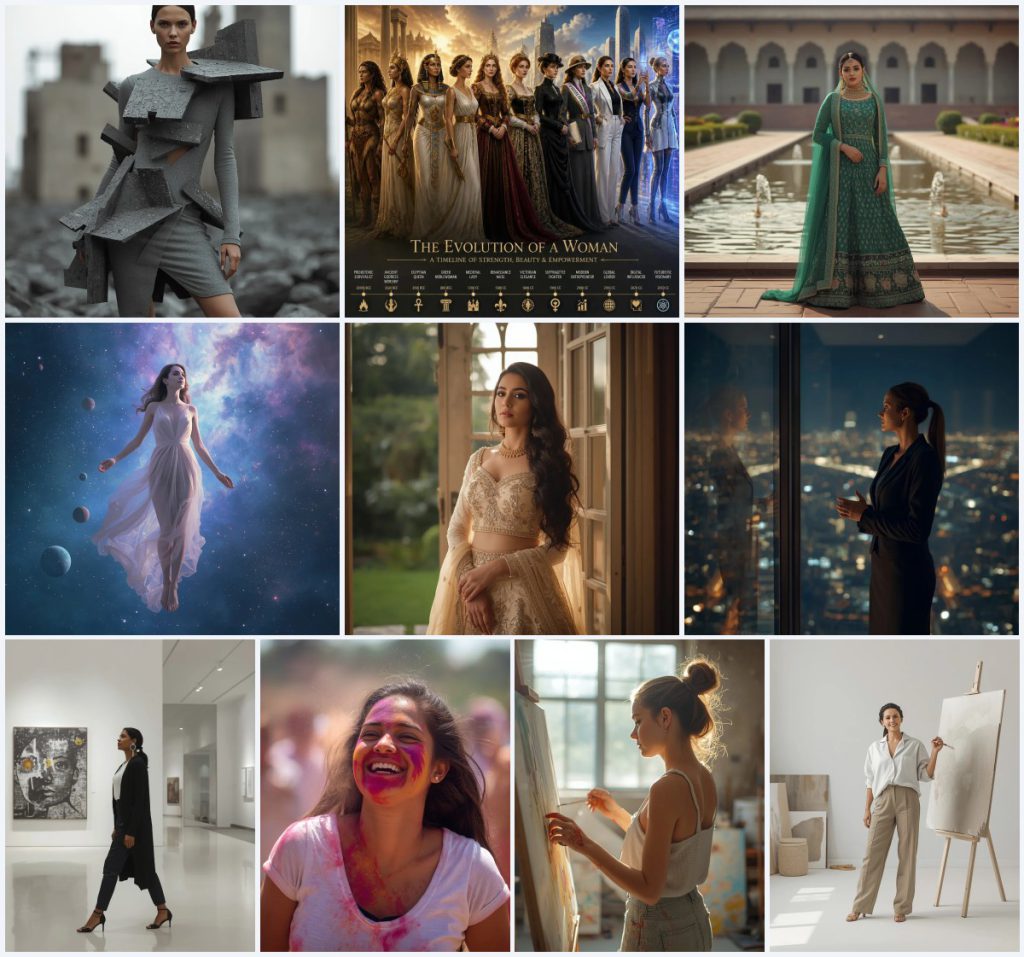
The core prompt set offers several distinct thematic avenues that blend ethereal movement with structured storytelling. Here are the prominent styles represented in this visual collection:
- Conceptual deconstructed architectural gowns featuring concrete-grey tones, rigid protrusions, and sharp cut-outs in stark urban landscapes.
- A historical evolution timeline depicting women across eras from ancient queens to modern visionaries.
- Regal Indian heritage aesthetics featuring an emerald green sharara suit inside a symmetrical Mughal garden palace.
- Full-body cosmic surrealism with floating translucent gowns drifting through starfields, glowing nebulae, and stardust.
- Indo-western fusion lehengas in cream and gold bathed in warm golden hour light through luxury villa arches.
- Corporate high-rise portraits capturing strategic determination against glittering night-time city skylines.
- Minimalist modern art gallery strides paired with monochromatic tailoring and sculptural silver jewelry.
- Joyful cultural celebration portraits coated in kaleidoscopic Holi gulal powder mid-motion.
- Sunlit creative studios filled with scattered canvases, paint-splattered hands, and floating dust motes.
- Clean minimalist art studios highlighting oversized linen tailoring and quiet artistic poise.
How to Use Dreamy Ethereal Portraits with Flowing Fabrics and Pastel Tones
Bringing these rich descriptions into your preferred tool requires a systematic workflow to ensure lighting, posture, and garment textures balance naturally. Follow these seven operational steps:
- Select the core concept that matches your artistic vision, whether it is a heritage garden setting or a futuristic celestial vista.
- Copy the exact descriptive prompt text from the source collection without omitting sensory details like fabric weight and atmospheric cues.
- Open your preferred generation tool, such as ChatGPT, Gemini, Midjourney, Flux, or Leonardo, and paste the prompt into the input console.
- Adjust aspect ratio parameters according to your intended platform, using vertical 4:5 or 9:16 for mobile displays and 16:9 for widescreen headers.
- Run an initial generation pass to check how the system interprets the lighting sources, drapery physics, and pastel balance.
- Refine secondary attributes by modifying descriptive adjectives, specifying fabric opacity, or softening facial expressions if the initial render looks rigid.
- Export the high-resolution output and apply subtle color grading or gentle clarity tweaks in your favorite photo editing suite.
What Kind of Base Photo Works Best?
If you plan to use an image-to-image pipeline or character reference technique, selecting the right input portrait is essential for maintaining aesthetic coherence. Your base image should feature neutral, even lighting without deep, harsh shadows across the jawline or cheekbones. Diffused studio light or soft cloudy daylight works best to keep skin tones pliable for soft pastel rendering.
The subject should maintain a natural, relaxed expression with posture aligned to the intended scene. Clean hair swept away from the neckline allows the generator to drape flowing organza, sharara shawls, or oversized linen collars without creating awkward artifacts around the ears and shoulders.
Which AI Tools Deliver the Best Results?
Different generative software systems possess unique strengths when rendering soft light, micro-fabrics, and intricate interior architecture. Understanding their characteristics ensures you achieve your desired creative outcome without wasted render credits.
| AI Tool | Key Strengths for This Theme | Recommended Use Case |
|---|---|---|
| Midjourney | Flawless textile sheen, atmospheric dust motes, and soft pastel color balance. | Celestial floating portraits and avant-garde architectural couture. |
| Flux | Exceptional prompt comprehension, natural hand anatomy, and sharp architectural symmetry. | Mughal garden palaces and minimalist art studio interiors. |
| Leonardo | Flexible fine-tuned models, granular contrast sliders, and canvas outpainting tools. | Indo-western lehengas and painterly sunlit studio spaces. |
| Gemini | Deep narrative context understanding and nuanced multicultural garment descriptions. | Historical evolutionary timelines and cultural festival scenes. |
| ChatGPT | Intuitive natural language rephrasing and prompt expansion capabilities. | Iterative prompt tailoring and generating alternative lighting setups. |
Pro Tips
To achieve the pinnacle of realism in ethereal portraiture, always specify the direction and quality of ambient light. Rather than simply requesting a bright scene, describe how the sunlight streams through tall arched windows, illuminating airborne dust motes, or how distant nebulae cast soft purple glows onto translucent hems.
Pay careful attention to fabric weight terminology. Words like translucent, billowing, stiff concrete-grey, and layered organza dictate how the algorithm models physics. Contradictory fabric descriptors will result in stiff, unnatural drapery. Pair structural terms with architectural backdrops and weightless terms with floating or motion-heavy compositions.
Common Issues and Quick Fixes
Generating intricate clothing and delicate lighting occasionally introduces distinct digital artifacts. Use the practical solutions in this diagnostic table to refine your outputs.
| Common Issue | Underlying Cause | Quick Fix |
|---|---|---|
| Blown-out highlights on pale fabrics | Excessive prompt weighting on bright lighting parameters. | Add terms like soft ambient diffusion or overcast morning light to balance exposure. |
| Rigid, frozen fabric movement | Lack of kinetic movement descriptors in the prompt narrative. | Include dynamic terms like billowing outward, mid-stride, or floating gracefully. |
| Muddy or oversaturated color tones | Conflicting palette keywords competing with the pastel direction. | Explicitly define pastel tones like soft cream, pale emerald, and dusty lavender. |
| Facial distortion near detailed jewelry | Model struggling to separate complex earrings from facial features. | Render at higher resolution or re-roll using an inpainting mask over the face. |
| Unnatural hand positions around brushes or props | Complex prop interactions confusing generative anatomy. | Simplify hand actions to poised rest, clasped hands, or paint-splattered fingers. |
Frequently Asked Questions
How do I get soft pastel tones instead of oversaturated colors in my portraits?
Specify muted pastel color palettes such as cream, soft gold, celestial blues, and gentle purples directly in the prompt text. Adding lighting directions like soft morning sun or gentle golden hour prevents harsh contrast and prevents artificial oversaturation.
Which clothing textures work best for dreamy ethereal portraits?
Textured concrete-grey architectural weaves, flowing translucent organza, intricately embroidered emerald green sharara suits, and Indo-western fusion lehengas provide rich tactile contrasts that artificial intelligence models render with convincing depth.
Can I use an existing selfie as a base for these artistic prompts?
Yes, you can upload a clean, evenly lit frontal portrait to your chosen generator as an image reference, and append the detailed prompt describing the celestial nebulae, studio background, or Mughal palace architecture to blend your likeness seamlessly.
Conclusion
Dreamy ethereal portraits with flowing fabrics and pastel tones offer an inspiring intersection of timeless elegance, cultural richness, and modern digital craft. By carefully orchestrating natural lighting, dynamic drapery, and evocative environments, you can produce captivating digital art that resonates deeply with viewers across platforms.
Take these prompts into your favorite creative tools, experiment with subtle adjustments in setting and silhouette, and watch your creative visions materialize into breathtaking reality.